 how-to
How to Avoid Hair Damage From Tight Braids
Last Updated: October 26, 2026
Quick Summary
Avoid hair damage from tight braids by asking your stylist to braid at a tension you can tolerate, never the tightest possible, and by removing the style if pain lasts more than a day or two. Keep braids in for two to four weeks, moisturize the scalp, and give your hair one to two weeks of loose styling between installs.
- Scalp tenderness that does not fade within 48 hours is a warning sign the braids are too tight.
- Long, heavy braids pull on the scalp even when each individual braid is loose.
- Apply a warm compress to tender areas for five to ten minutes at a time, a few times a day.
- Most braids should stay in for two to four weeks, with two months as an absolute ceiling.
- Budget 30 to 60 minutes for a full takedown, longer for small braids.
Table of Contents
- Why Tight Braids Damage Hair and Scalp
- Signs Braids Are Too Tight
- Pre-Installation Tension and Weight Checklist
- How to Relieve Tight Braids Fast
- Protecting Edges in Braids
- How Long to Keep Braids In
- Moisturizing and Scalp Care While Braided
- Book a Tension-Aware Braiding Consultation
- Frequently Asked Questions
Why Tight Braids Damage Hair and Scalp
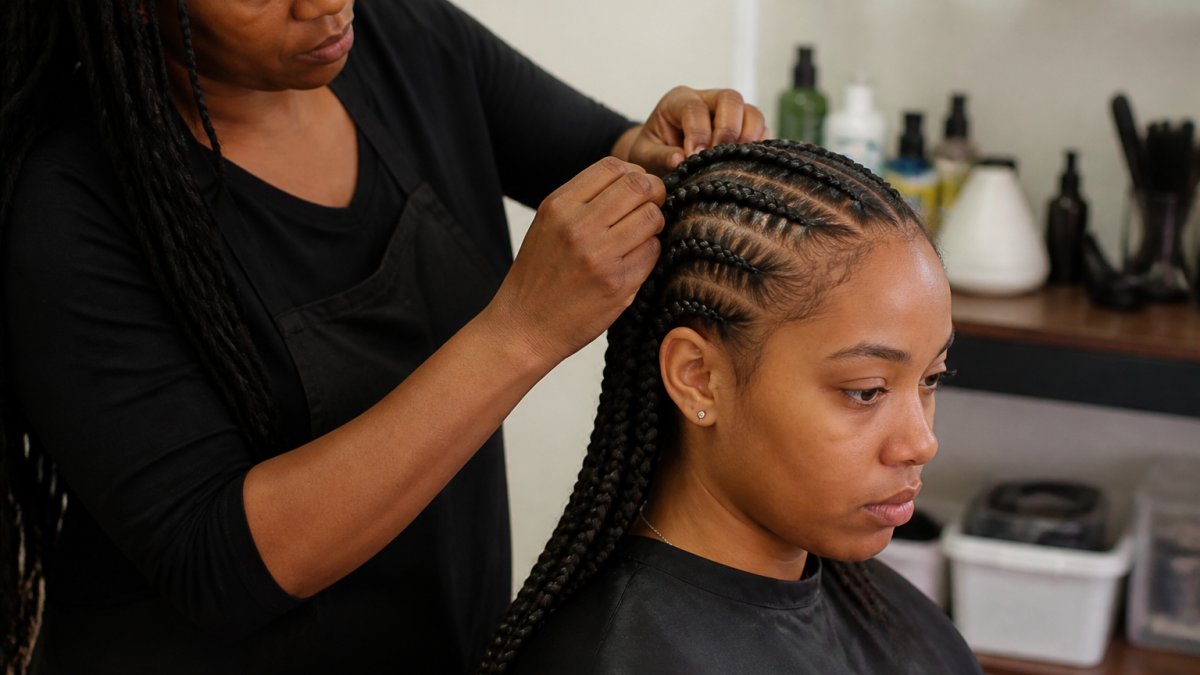
Tight braids are one of the most common causes of preventable hair loss in textured hair, and the damage rarely shows up overnight.
The problem is mechanical. Each follicle has a limited tolerance for pull; when a braid exceeds it, the follicle responds with inflammation that turns into thinning, breakage, and in some cases permanent hair loss called traction alopecia.
Traction alopecia is hair loss caused by sustained pulling force on the hair follicles, usually from tight hairstyles like braids, twists, and ponytails (the American Academy of Dermatology). It is the most studied injury linked to protective styling, and the American Academy of Dermatology's guidance on hair loss names tight hairstyles as a leading, avoidable trigger.
The frustrating part? Tight braids often look the best on day one. That's exactly what makes them dangerous.
How Prolonged Tension Affects Follicles
Prolonged tension inflames the follicle, causing the tenderness and headaches many clients describe, and weakens the hair shaft where it exits the scalp, so strands snap before they can grow out.
Follicles under constant pull gradually shift position, so over months of repeated tight styling the hairline creeps backward and the part widens. Once a follicle scars over, regrowth stops entirely, which is why dermatologists treat traction alopecia as time-sensitive: early intervention reverses it, late intervention often does not.
Signs Braids Are Too Tight
The clearest sign braids are too tight is pain lasting more than a day or two after installation. Some tenderness on day one is normal; ongoing scalp tenderness, headaches, or a pulling sensation when you move your eyebrows means the tension is too high.
Watch for these warning signs:
- Scalp tenderness that does not fade within 48 hours
- Headaches or a heavy, throbbing feeling at the roots
- Small bumps or pimples along the braid line
If you can see the skin being pulled taut around each braid, the installation is too tight. No amount of styling skill makes that acceptable.
Pre-Installation Tension and Weight Checklist
The best time to prevent damage is before the first braid goes in. Tension problems are easier to avoid than to fix.
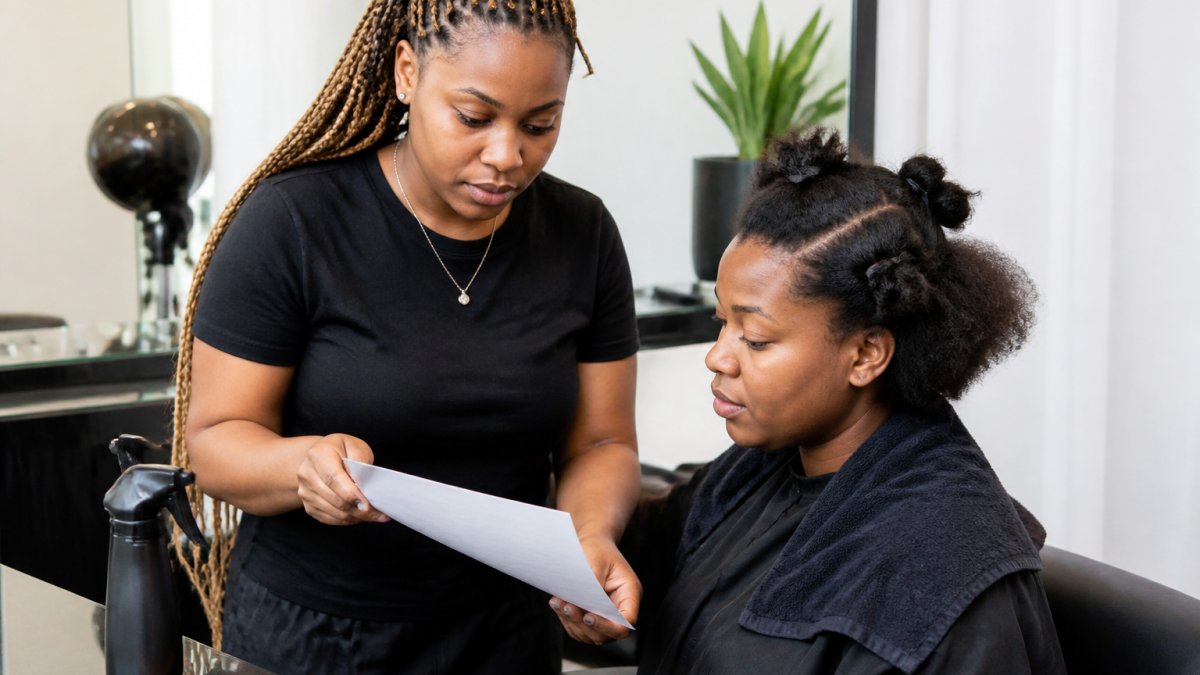
Use this list before you sit in the chair:
- Confirm your stylist will braid at a tension you can tolerate, not the tightest possible
- Discuss the size and weight of the braids relative to your natural density
- Flag any history of sensitive scalp, headaches, or past tension damage
Weight matters as much as tension. Long, heavy braids pull on the scalp even when each braid is loose.
A common mistake is choosing a style from photos alone. Bring a reference, but let your stylist adapt it to your hairline, density, and texture, that conversation separates a safe install from a risky one.
How to Relieve Tight Braids Fast
If your braids hurt, treat it as an urgent signal, not a nuisance to ride out. The first 24 to 48 hours are when most tension damage is still reversible, before inflammation turns into scarring. Act the same day.
Step 1: Decide whether the install can stay
Use this decision tree before you try any home remedy:
- Pain is mild and fading after 24 hours, with no visible pulling at the hairline: you can manage it at home and monitor.
- Pain is moderate, steady, or accompanied by headaches at the 24-hour mark: call your stylist and ask for the tightest braids to be loosened or redone. Do not wait for the 48-hour mark.
- Pain is severe, wakes you at night, or comes with visible skin puckering around the braids: ask for the style to be removed, not just loosened. A braid that has already puckered the skin is pulling harder than the follicle can tolerate.
A good stylist will not argue with you about pain. If yours does, find a different braider.
Step 2: Reduce tension at home while you wait
- Do not pull or tug at the braids to loosen them. That adds stress to the root and can snap hair at the scalp.
- Apply a warm compress to tender areas for five to ten minutes at a time, a few times a day, to increase blood flow to the follicle.
- Spritz the scalp with cool water or a light leave-in to calm irritation. Avoid heavy oils directly on inflamed skin.
- Take an over-the-counter pain reliever for headaches, following the label directions.
- Sleep on a satin pillowcase and avoid tight ponytails, scarves, or bonnets that press on the hairline overnight.
- Keep the scalp clean. Diluted shampoo or a gentle scalp rinse removes buildup that can worsen irritation.
Step 3: Know when to see a doctor, not a stylist
Some redness and tenderness can be managed at home. Other symptoms need medical care. Seek a dermatologist or physician promptly if you notice:
- Spreading redness, swelling, warmth, or fever, possible infection
- Pus, weeping, or open sores along the braid line
- Patches of hair loss that keep growing after the braids are removed
A dermatologist can assess whether traction alopecia has started, rule out other causes, and discuss treatment. It is time-sensitive: early intervention reverses it in many cases, late intervention often does not. If you have a history of tight styling and any of these signs, do not wait.
Step 4: Reset before the next install
Once the braids are out, give your scalp at least one to two weeks of loose, low-tension styling before you book again. Use that window to moisturize, gently detangle, and let tenderness fully resolve. If the same area hurts every time you braid, raise it with your stylist and a doctor.
Protecting Edges in Braids
Edges are the most fragile hair on your head and almost always the first casualty of tight styling. Protecting edges in braids comes down to three habits: keep them loose, keep them moisturized, and keep them off the tension line.
- Ask your stylist to braid the hairline with noticeably less tension than the rest
- Avoid pulling edges into tight ponytails or high buns
- Skip heavy edge control gels that dry the hair out
If your hairline is already thinning, tell your stylist before the next appointment. A tension-aware braider can adjust the pattern, shift the part, or leave the perimeter loose so those follicles can recover.
How Long to Keep Braids In
Most braids should stay in for two to four weeks, with up to two months as an absolute ceiling for well-maintained, lighter styles. Anything longer invites buildup, matting, and prolonged tension that quietly damages the hairline.
The right duration depends on a few factors:
| Style Type | Suggested Wear Time | Why |
|---|---|---|
| Small or micro braids | 2-3 weeks | Higher tension per braid, harder to clean |
| Medium box braids | 4-6 weeks | Balanced tension and manageability |
| Larger or heavier styles | 2-4 weeks | Weight pulls on the scalp |
| Twists | 3-4 weeks | Looser tension but prone to buildup |
Two things shorten that window: new growth pushing the braids outward, and any return of tenderness. Both mean the style is working against your scalp. Take it down.
Safe takedown: the step most people rush
Most breakage from braids happens during removal, not wear. A slow, structured takedown protects the hair you spent weeks growing.
- Set up before you start. Work in a well-lit area with a wide-tooth comb, a fine-tooth comb, a spray bottle of water and light conditioner, and a trash bag for the extensions.
- Cut below the knot, never at the root. Snip the extension below where it is tied with small scissors, then unravel with your fingers. Never cut close to the scalp.
- Work one braid at a time. Spray the section with water and conditioner to soften buildup, then finger-detangle from the ends upward.
- Do not rip through tangles. If a section will not release, apply more conditioner, wait a minute, and work it loose with a wide-tooth comb starting at the ends.
- Section and detangle as you go. Keep removed hair separated so you are not re-tangling clean sections.
- Wash gently after removal. Use a sulfate-free shampoo and a moisturizing conditioner, and avoid harsh detangling while the scalp is still sensitive.
Budget 30 to 60 minutes for a full takedown, longer for small braids.
Recovery timeline: what to realistically expect
Traction damage does not reverse overnight, and no product guarantees regrowth. A realistic pattern:
- First 1-2 weeks after removal: tenderness should fade. If it does not, see a doctor.
- First 1-3 months: shedding of hairs that were already loosened by tension is common. This is not new damage; it is the fallout from the previous install.
- 3-6 months: with low-tension styling and good scalp care, many people see visible improvement at the hairline and part.
Prolonged traction can cause lasting loss. If a follicle has scarred over, regrowth may not return without medical treatment. That is why early action matters more than any single product.
Post-braid care before the next install
Give your hair and scalp a rest of at least one to two weeks between installs. Use that window to deep-condition, trim split ends, and keep the hairline loose. If the same area hurts every time you braid, raise it with your stylist and consider a dermatology consult.
Moisturizing and Scalp Care While Braided
Dry, neglected hair under braids becomes brittle and breaks during removal. Hydration is the whole game.
Keep a spray bottle of water and light leave-in conditioner. Mist the scalp and braids a few times a week, focusing on roots and hairline.
A few practical habits that protect hair retention:
- Detangle gently before installation so you start with smooth, tangle-free hair
- Avoid heavy products that sit at the root and attract lint
- Cover your hair at night with a satin bonnet or scarf
When it's time for braid removal, do it slowly. Cut extensions below the knot, never at the root, and work through each section with your fingers and a wide-tooth comb.
Book a Tension-Aware Braiding Consultation
The difference between a protective style and a damaging one is rarely the style itself. It's the tension, the weight, and the care behind it.
Precious B Artistry brings over 20 years of professional experience with multicultural hair, specializing in micro and corn-row braid extensions, loc maintenance, and precision cutting.
Get started with Precious B Artistry and book a consultation that puts your hairline first.
Frequently Asked Questions
Are tight braids bad for your hair?
Tight braids pull on the hair follicles and scalp, and repeated or prolonged pulling is linked to hair breakage, thinning edges, and traction alopecia. The risk climbs when tension is high at installation and stays high for weeks. Braids themselves are not the problem; excessive tension is. A braider who checks weight, parting size, and scalp comfort during installation can give you a protective style that holds without damaging the hairline.
What should you do if your braids feel too tight?
Act the same day. Take an over-the-counter pain reliever if needed, apply a warm compress to the scalp, and mist the hairline with water or a light leave-in to ease pulling. Do not yank or tug the braids. If pain, headaches, or scalp tenderness continue past 48 hours, or you see bumps or broken skin, have the braids removed by a professional rather than waiting it out.
How long should you keep braids in to prevent damage?
Most protective styles should come out within two to four weeks, and some stylists allow up to two months for larger, lighter styles on strong hairlines. Leaving braids in for three months or longer raises the risk of matting, buildup, and prolonged tension on the follicles. If you notice new thinning at the hairline or pain when you move your head, remove the style early regardless of the calendar.
Can tight braids cause hair loss or breakage?
Yes. Constant pulling from tight braids, twists, and ponytails can lead to traction alopecia, which starts as thinning at the hairline and edges and can become permanent if the tension continues. Breakage also happens where braid extensions meet fragile natural hair. Catching the signs early, widening parts, and giving the scalp rest between styles are the most reliable ways to protect hair growth and retention.
