 blog
What Are the Best Protective Styles for Natural Hair?
Last Updated: October 25, 2026
Quick Summary
Protective styles for natural hair minimize daily manipulation, reduce breakage, and allow your hair to retain moisture over weeks or months by keeping strands protected from environmental stressors and friction. Popular options include box braids, knotless braids, two-strand twists, cornrows, flat twists, Marley twists, Bantu knots, and faux locs, each suited to different hair types and preferences.
- Box braids and knotless braids are versatile long-lasting styles that come in multiple sizes for different hair types.
- Two-strand twists are simpler to install than braids and work well for most hair types and lengths.
- Knotless braids reduce tension at the roots by starting with loose hair rather than a knot at the base.
- Remove protective styles immediately if you experience pain, excessive tension, or scalp discomfort to prevent tension alopecia.
- Sleep on silk or satin pillowcases and moisturize braids every 2-3 days to maintain hair health during protective styling.
Table of Contents
- Why Protective Styles Matter for Natural Hair Growth
- Easy Protective Styles for Natural Hair You Can Wear Long-Term
- Protective Styles for Short Natural Hair
- How Long to Keep Protective Styles In
- How to Maintain Natural Hair in Braids
- Choosing the Right Protective Style for Your Hair Type and Lifestyle
- Schedule Your Protective Style Consultation
- Frequently Asked Questions
Why Protective Styles Matter for Natural Hair Growth
Protective styles for natural hair are essential for maintaining length and health. These styles minimize daily manipulation, reduce breakage, and allow your hair to retain moisture over weeks or months.
The real benefit goes beyond just looking good. Protective styling is a strategy for length retention. Many people with natural hair find that consistent protective styling leads to noticeable growth over time. Your hair grows regardless, but protective styles help you keep what you grow instead of losing it to breakage.
At Precious B Artistry, we've worked with clients for over two decades, helping them with their hair journey through strategic protective styling.
Here's what protective styles actually do for your hair:
- Reduce manipulation and friction that causes breakage
- Lock in moisture and prevent dryness
- Give your edges and scalp a break from tension
- Allow you to maintain length while your hair grows
- Simplify your daily routine with low-maintenance styling
- Give you versatile looks without heat damage
The key is choosing styles that work for your specific hair type, lifestyle, and scalp sensitivity. Not every protective style suits every person.
Easy Protective Styles for Natural Hair You Can Wear Long-Term
The best protective styles for natural hair are ones you can wear comfortably for extended periods without causing tension or damage. These styles balance protection with practicality. You want something that looks great, feels secure, and doesn't strain your scalp or edges.
Box Braids and Knotless Braids
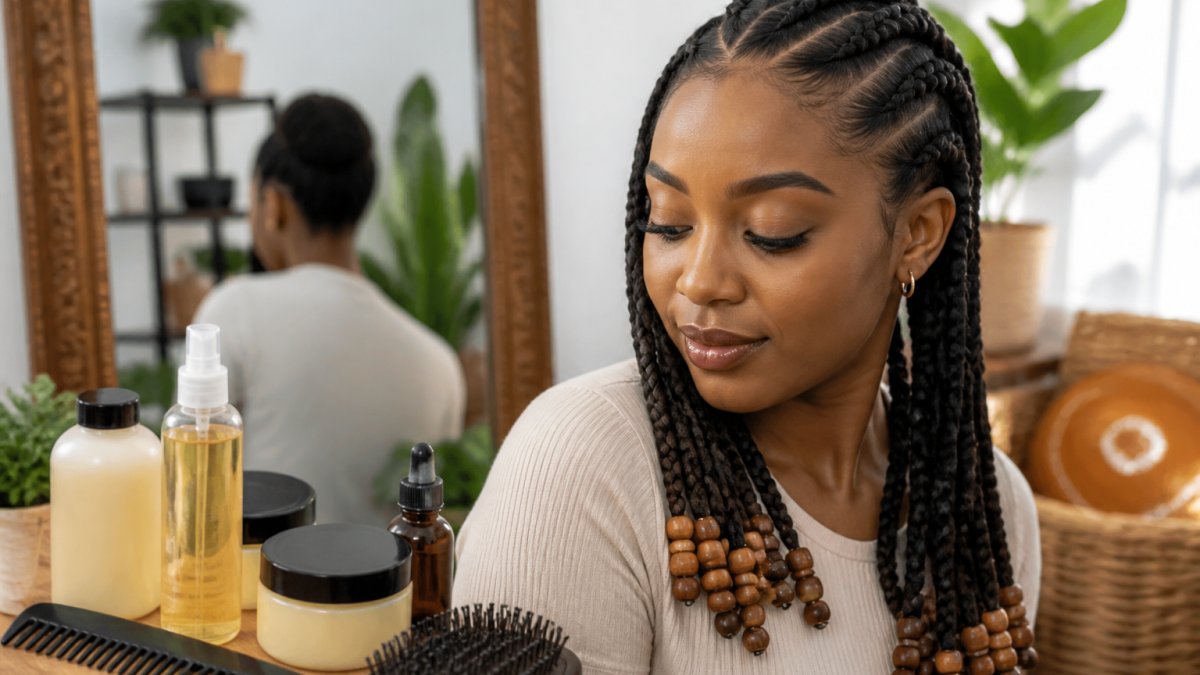
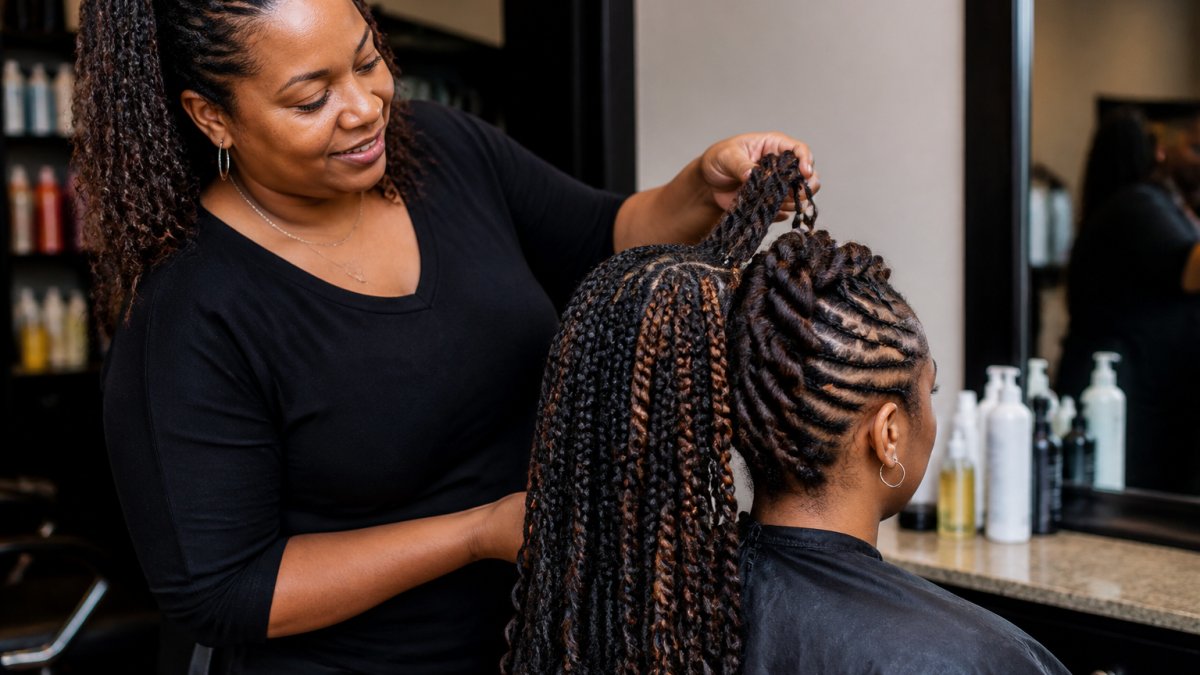
Box braids remain one of the most popular protective styles for natural hair. They're versatile, long-lasting, and come in multiple sizes to suit different preferences and hair types. Small box braids work well for finer hair or those wanting a sleek look. Medium and larger box braids suit thicker hair textures and offer a bolder aesthetic.
Knotless braids have gained popularity because they start with loose hair rather than a knot at the base. This reduces tension at the roots and scalp, making them gentler on sensitive edges. Many people find knotless braids more comfortable for extended wear, especially if you've experienced headaches or scalp tenderness with traditional box braids.
Both styles can be worn for an extended period with proper care. The longevity depends on your hair growth rate, how well you maintain them, and how tight the braids were installed.
Twists, Cornrows, and Flat Twists
Two-strand twists are a fantastic protective style that works for most hair types and lengths. They're simpler to install than braids and can be done with your own hair or with added hair for volume and length. Twists offer a softer, more relaxed look than braids while still protecting your ends.
Cornrows and flat twists follow the same protective principle but offer different aesthetics. Cornrows create clean, geometric patterns along your scalp. Flat twists are similar but use two sections of hair twisted together rather than braided. Both styles work beautifully as protective styles for natural hair because they keep your ends tucked away and minimize daily manipulation.
Marley twists combine your natural hair with Marley hair (a textured synthetic fiber) to create thicker twists with more volume. They're lightweight, affordable, and offer good protection when installed with appropriate tension.
Bantu Knots and Faux Locs
Bantu knots are small, coiled protective styles that sit close to the scalp. They're excellent for shorter hair or transitioning hair and can be worn as-is or unraveled for a wavy texture. Bantu knots reduce tension on your edges and work well for sensitive scalps when installed loosely.
Faux locs create the appearance of locs using your natural hair or added hair twisted and styled into loc-like sections. They offer the aesthetic of locs without the long-term commitment of real locs.
Both styles work as protective styles for natural hair by keeping your ends protected and reducing daily manipulation. They're also lower-maintenance once installed compared to some other protective styles.
Here are the main protective styles for natural hair and what makes each one distinct.
| Style | Best For | Key Difference |
|---|---|---|
| Box Braids | Most hair types | Come in multiple sizes for different preferences |
| Knotless Braids | Sensitive edges | Start with loose hair, reduce tension at roots |
| Two-Strand Twists | Most hair types | Simpler to install than braids, softer look |
| Cornrows | Most hair types | Clean, geometric patterns along scalp |
| Flat Twists | Most hair types | Two sections twisted together, not braided |
| Marley Twists | Volume seekers | Lightweight, affordable, textured synthetic fiber |
| Bantu Knots | Short or sensitive hair | Small coiled styles, reduce edge tension |
| Faux Locs | Locs aesthetic seekers | Appearance of locs without long-term commitment |
Protective Styles for Short Natural Hair
Short natural hair needs protective styling too. Many people assume protective styles require length, but that's not true. Short hair can benefit enormously from protective styling for growth and health.
Box braids on short hair create a polished, defined look while protecting your ends. Smaller braids work better with shorter lengths to maintain proportion and reduce tension.
Two-strand twists are ideal for short natural hair. You can create them with your own hair for a completely natural protective style, or add hair for more volume and visual interest.
Cornrows on short hair create beautiful patterns and keep your hair secured and protected. Short cornrows are less likely to cause tension issues because they're shorter and lighter overall.
Bantu knots are particularly suited to short natural hair. They look intentional and stylish on short lengths and provide genuine protection for your ends.
How Long to Keep Protective Styles In
How long to keep protective styles in depends on several factors: your hair growth rate, how well you're maintaining the style, the specific style type, and your scalp's condition.
Box braids and knotless braids can stay in for an extended period. If you notice significant slippage or your scalp feels uncomfortable, it's time to remove them.
Two-strand twists can last for several weeks before they need refreshing or removal.
Cornrows and flat twists can last for several weeks depending on how tight they were installed and how much new growth you have.
Marley twists, faux locs, and Bantu knots can last for several weeks.
The most important rule: remove your protective style if you experience pain, excessive tension, or scalp discomfort. No style is worth damaging your hair or scalp. If a style hurts after a few weeks, take it down.
How to Maintain Natural Hair in Braids
Maintaining your hair while wearing protective styles is crucial. Proper maintenance extends the life of your style, keeps your scalp healthy, and ensures your hair stays in good condition underneath.
Scalp Care and Tension Awareness
Your scalp needs attention even while your hair is braided. Wash your scalp gently with a sulfate-free shampoo diluted in water. Use a spray bottle to apply the shampoo directly to your scalp, then rinse thoroughly.
Watch for warning signs of tension damage. If you experience consistent headaches, notice hair loss around your hairline, or see redness on your scalp, your braids are too tight. Tension alopecia is real and preventable (The art of prevention: It’s too tight, Loosen up and let your hair down). Looser braids always outperform tight ones for long-term hair health. The slight aesthetic trade-off is worth protecting your edges and hairline.
Massage your scalp gently with your fingertips when washing. This stimulates blood flow and keeps your scalp healthy. Avoid scratching or picking at your scalp, which can cause irritation or infection.
Nighttime Routine and Moisturizing
Your nighttime routine matters just as much as daytime care. Sleep on a silk or satin pillowcase or wrap your braids in a silk scarf. Cotton pillowcases create friction that can frizz your braids and cause breakage. Silk reduces friction and helps your braids stay neat longer.
Moisturize your braids and the hair underneath every 2-3 days. Use a lightweight leave-in conditioner or braid moisturizer sprayed lightly on your braids. Focus on your ends, which dry out fastest. Don't oversaturate, damp is good, soaking wet is not.
Some people apply oils to their braids, but use restraint.
Keep your braids neat by gently smoothing any frizz and retightening loose sections.
Choosing the Right Protective Style for Your Hair Type and Lifestyle
The best protective style for you depends on your hair characteristics and how you live.
For thick, coarse hair: Box braids, cornrows, and larger twists work beautifully. Your hair holds styles well and can handle tighter installations without as much risk.
For fine or delicate hair: Knotless braids, loose two-strand twists, and gentle cornrows are better choices. Avoid tight installations.
For textured, coily hair: Most protective styles work well. The key is choosing installation tension that's comfortable for your scalp.
For active lifestyles: Cornrows, flat twists, and tight braids stay secure during movement. If you swim, braided styles hold up better than twists.
For low-maintenance preferences: Cornrows and tight braids require less daily upkeep. Twists and loose braids need more maintenance to stay neat.
For sensitive scalps: Knotless braids, loose two-strand twists, and Bantu knots minimize tension. Avoid very tight installations.
Schedule Your Protective Style Consultation
Choosing protective styles for natural hair works best with professional guidance. Every head of hair is different, and what works for your friend might not suit your hair or lifestyle.
At Precious B Artistry, our consultation process starts by understanding your hair type, your goals, and any previous experiences with protective styling.
We assess your hair's current condition, discuss how long you want to wear the style, and talk through maintenance expectations.
The consultation is thorough because we believe it's the foundation of great results. We take time to answer your questions and make sure you feel confident about your protective style choice.
Protective styling is one of the most powerful tools for maintaining healthy, growing natural hair. The right protective style protects your ends, reduces breakage, and lets you retain the length your hair is growing.
Frequently Asked Questions
How long should you keep protective styles in?
Most protective styles can be worn for an extended period, depending on the style and your hair growth rate. Watch for signs of tension, flaking, or itching, these signal it's time for removal and a break.
Can protective hairstyles help reduce breakage and promote hair growth?
Yes. Protective styles minimize daily manipulation and friction, which are major causes of breakage in natural hair. By keeping your ends tucked away and reducing styling stress, protective styles create an environment where hair can retain length. Combined with proper scalp care and moisture, they support healthy hair growth. However, the style must be installed and maintained correctly, excessive tension can damage edges and cause traction alopecia.
How do you care for natural hair while it is in a protective style?
Keep your scalp clean and moisturized with lightweight oils or scalp serums. Wrap your hair at night with a silk or satin bonnet or scarf to reduce friction. Mist your braids or twists lightly with water and leave-in conditioner every few days. Avoid over-washing, rinse with cool water when needed, and use a gentle cleanser. If you experience tension headaches or scalp tenderness, loosen the style or remove it early.
What protective styles work best for short natural hair?
Short natural hair benefits from low-manipulation styles like small box braids, two-strand twists, cornrows, and Bantu knots. These styles don't require length and protect your hair from daily handling. Knotless braids also work well for shorter lengths if installed by an experienced stylist. Avoid styles with heavy extensions on short hair, as they can cause tension and breakage. A consultation with a skilled braider ensures the right style for your hair density and texture.